Regenerative braking is one of the latest technologies gaining attention in the e-mobility space. Moreover, the impact of this technology on riders is numerous. It offers extended battery life, making the e-bike more efficient.
This energy-recapturing system is a common phenomenon in cars. This leaves many riders curious about how impactful it is in an e-bike. So the common question is, how does regenerative braking work in cars?
Well, in this blog post, we will discuss everything you need to know about regenerative braking. How it works, its benefits, an ideal use, and finally its limitations. So when you next want to purchase an e-bike, you can seek this feature.
What is Regenerative Braking in an E-bike?
Regenerative braking, as it is often called, is a system that converts the energy lost when you apply the brakes to electrical power. In the traditional bike, this kinetic energy is converted into heat through friction. But with a regenerative braking system, power is returned to your e-bike battery.
Let’s break down how regenerative braking works in a simple process:
You slow down — e-bike motor reverses — energy flows back to the battery.
While regen braking won’t fully charge a dead battery, it will help extend e-bike range. If you love riding on hilly terrain, you will experience improved ride efficiency and reduced brake wear.
How Regenerative Braking Works in E-bikes
With the prerequisite knowledge of e-bike motors, you will get the concept of the regenerative braking process. In e-bike production, manufacturers use either the hub motors (front or rear), mid-drive motor, or direct-drive hub motors. Although direct drive hub motors are not as common as the other two, they are the ones that support regenerative braking.
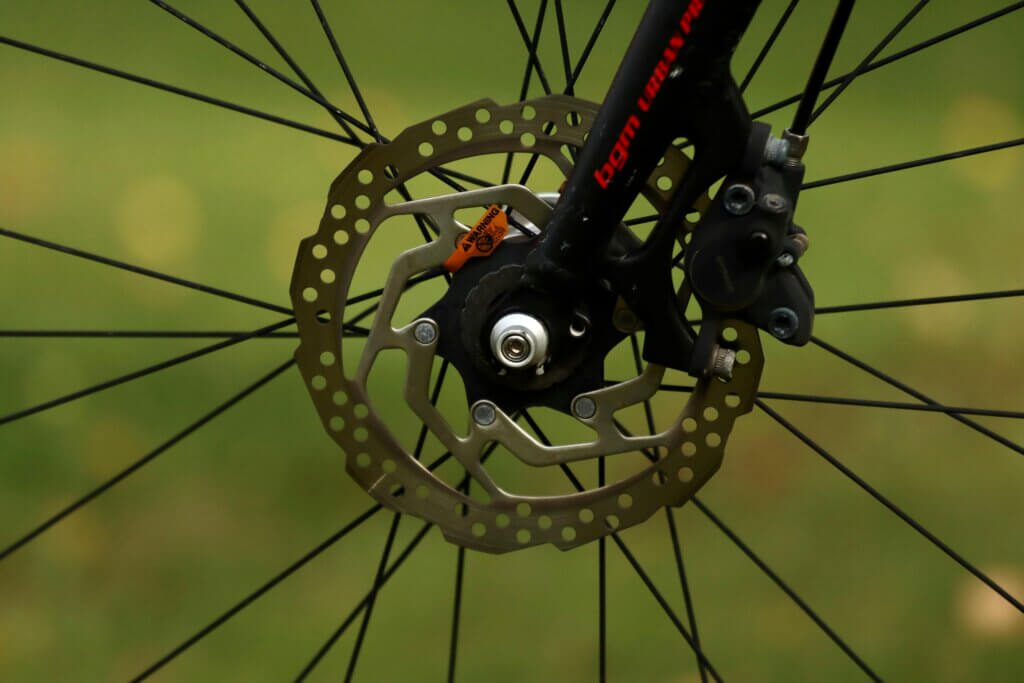
Here are simple steps on how it works:
When you apply the brake
The moment you engage the brake lever, the regen braking system sends a message to your e-bike controller.
Controller switch motor function
The controller switches motor functions, enabling it to become a standby generator. What does that mean? During normal riding, the motor withdraws energy from your battery to power your wheel. But during braking, the controller reverses the process by allowing the motor to produce energy rather than consume it.
Magnetic Resistance as Motor Switches Mode
When the motor switches to generator mode, it creates magnetic resistance that slows down the e-bike wheels. Hence, the regenerative braking effect.
Flow of Energy
While performing the switching duty, it converts kinetic energy into electric energy. This converted energy is stored in the battery for later use.
Repeat Cycle
Every time you ride downhill, you capture more energy for your e-bike battery. In modern e-bikes, the energy recapture features of regenerative braking are at the heart of riders.

Advantages of Regenerative Braking in E-bikes
There are several benefits to regenerative braking on an e-bike. Here is a list of benefits:
Increase Battery Lifespan and Range
The e-bike range depends on terrain, weight, and riding style. But regenerative braking also adds about 3%- 10% extra range to your e-bike commute. As you ride through your urban street, you have no worries of running out of power.
Support Sustainable Ride
Regenerative braking helps reduce wasted energy, using an eco-friendly method. This technology advancement remains one of the most sustainable features in 2025.
Reduced Brake Pad Wear
This braking saves you the heavy cost of maintenance and less brake pad wear. This is because it uses magnetic resistance against friction.
Improved Riding Efficiency
The recycling system helps city commuters to maximize energy as they ride through stoplights and intersections. Every ride becomes an opportunity for riders to gain efficiency.
Better Downhill Riding Control
Riders experience natural resistance, which helps them maintain speed on steep-sloped roads. Regenerative braking also builds riders’ confidence, making riding smoother.
Limitations of Regenerative Braking in E-bikes
Although regenerative braking is a technological breakthrough in the e-bike world, it also has its limitations. Here are the key limitations:

Limited to Direct Drive Hub Motor
Direct-drive isn’t popular in most modern e-bikes, due to its heavy weight. Climbing hills can be tedious with this direct-drive motor. This is why many e-bike brands stick to mid-drive motor or gear hub motors. And the regenerative braking isn’t compatible with these other motors except for direct-drive.
Limited Energy Recovery
Unlike EVs, which recover about 20% – 30% of their energy loss, regenerative braking in e-bikes can recover around 10%. This is due to their lightweight, lower-speed design. Therefore, they don’t waste so much kinetic energy to have a massive gain.
Limited to Some Riders
Not all e-bike cyclists will benefit from regenerative braking. However, urban commuters, heavy traffic riders, and frequent downhill riders will enjoy this new feature.
Riders who travel on flat surfaces while maintaining constant speed do not need this feature. If you plan to use your e-bike for exercise, this feature isn’t ideal for that style of riding.
Potential Heat Issue
The motor winding sometimes generates heat during regenerative braking at high speed. Manufacturers have to add a cooling system for safety.
How Regenerative Braking Impacts Your E-bike Battery
One common question among riders is whether regen charging damages or shortens battery life. Fortunately, it doesn’t.
Below are reasons why your lithium-ion battery handles this regen system os safely converting energy:
- Recharging is in small bursts.
- BMS prevents overcharging.
- The controller ensures voltage regulation.
An interesting perspective on the regen effect on battery longevity. Regenerative braking extends battery durability by reducing the number of charging cycles.
Which E-bikes Have Regenerative Braking in 2025?
Direct-Drive Hub Motor E-bike
An e-bike with a direct-drive hub motor has this feature. Below is a list of bikes with direct-drive :
- Cargo e-bikes
- Long-range touring e-bikes
- Commuter e-bike with high-power capacity
- Common in class 3 e-bikes
Hybrid and Performance E-bikes
A good number of performance-oriented e-bike brands are experimenting with regenerative systems to stand out.
Delivery e-bike
Delivery e-bikes stop frequently; therefore, many brands are building these e-bikes to take advantage of the energy recovery feature.
Premium Brands
Innovative brands are beginning to adopt regenerative braking systems. These brands include Rad Power’s customised option, while Juiced Bikes’ high-speed models. Finally, Delfast also tried it with some of their long-range models.
Regenerative Braking Vs Traditional Braking
| Feature | Regenerative Braking | Traditional braking |
| Energy use | Energy is converted to electricity | Energy is wasted as heat |
| Hill control | Smooth and controlled | Brake type decides |
| Motor requirement | Direct-Drive only | Compatible with any motor type |
| Stopping power | Moderate | Very strong |
| Brake pad wear | Minimal | High |
Tip: Some e-bike brands use both braking systems together for optimal performance.
Final Thoughts
Ultimate regenerative e-bikes are a great option for riders who prefer a longer range e-bike. If you are a lover of sustainable commuting, lower maintenance, and better downhill control, the regen system will serve you better.
However, there is still room for improvement, and other commuters might also enjoy the powerful regen system. The constant improvement in batteries and motors makes it a possibility.
As 2026 approaches, regenerative braking remains a standout feature for sustainable riders and smart commuters. A reliable and efficient booster in the e-bike world despite its limitations.